Maintaining Meaningful Connection with Patients in the Time of Telehealth
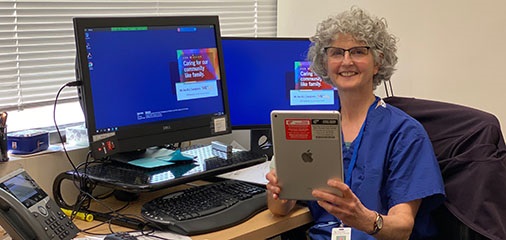
In 33 years of practice, I have seen a lot of change. I thought I had mastered the most demanding transition about a decade ago, when I had to go from paper chart to computer record. But I was wrong. On Monday I'll brave my first video encounters. It feels a bit like when I was starting out in medicine, a mixture of excitement and fear.
When I had to adapt to the computer as my mode of record, it changed almost every part of the way I interacted with patients. It changed my posture in the room, my eye contact with patients, my flow of thinking and speaking. I joked with patients that my boss had invited Mr. Flathead into the room, someone who would be beneficial to both of us, but who also required of my attention.
Through the change to electronic record, a few parts of the patient encounter serve as a bridge from the past. Even when it is not necessary, I put my stethoscope in my ears, communicating without words: I am listening to what is in your heart. Many of my visits are OB checks, where the patient and I listen together to the heartbeat of a mysterious person who is yet to be. If the visit is solely a discussion about mood, I find a gentle pat on the shoulder gives the message, I am beside you. Touch is an important part of my interaction with patients.
Now I will have to use words to express that I am hearing and witnessing. I am sure I will learn as I go. For OB visits, I will borrow from my midwife colleague Sandy Gerling. I overheard her saying, "After this call, take a few minutes to put your hands on your belly and connect with your baby." A beautiful, empowering message. Creative ways of connecting with and empowering patients may be a silver lining in this dark time.
I did not think I would have such an enormous challenge at this late point in my career. The coronavirus pandemic has turned everything, including routine medical care, upside down. Whether from behind a mask, or over a flat screen, I see Valley caregivers motivated to connect with patients within safe parameters. With tech support, tips from colleagues, and feedback from patients, I am hopeful we will widen our options for meaningful encounters.