

Pelvic Floor Rehabilitation at VMC
What is pelvic floor physical therapy and why is it important?
It is estimated that one in four women will have at least one pelvic floor disorder within their lifetime and the prevalence of pelvic pain in men has been estimated to be 2-16%.[1] [2] Pelvic floor dysfunction is associated with depression, social isolation, anxiety, and generally reduced quality of life.[3] These conditions affect people’s health, relationships, and self-image but often go undiagnosed for years.[4]
Although these issues are common, help is available. Pelvic floor physical therapists have advanced training and focus on restoring function by improving muscular support around the pelvis, normalizing muscle tone, improving behavioral/dietary habits, and re-training body movements to allow for optimal function.
What patients are served by the pelvic floor physical therapy program?
Our team treats all people who are at least 18 years old.
What does treatment include?
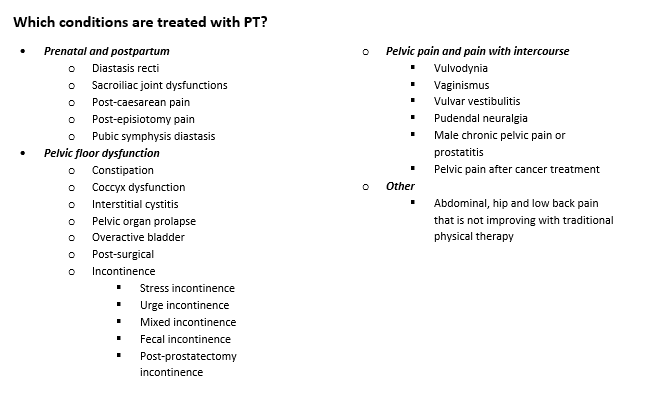
Rehabilitation for the pelvic floor is more than just strengthening the pelvic muscles. In fact, “kegels” can actually worsen symptoms for many of these diagnoses. Physical therapists utilize manual therapy - including intravaginal and intrarectal muscle assessment and treatment, biofeedback, behavioral modification, and therapeutic exercise to improve patient function and quality of life.
Where is the clinic located?
Our pelvic floor physical therapy program is located within the Rehabilitation Services department on the ground floor of the Northwest Pavilion.
Who can I contact for more information about pelvic floor physical therapy?
If patients or providers have any questions, we encourage you to call Janelle Trippany at 425.228.3440 ext. 3776. If you would like to schedule an appointment, please call our front desk at 425.251.5165. Referrals within VMC can be placed in Epic under REF87 or from outside VMC, faxed to 425.656.4028. Note: Although Washington is a direct-access state for PT, we do require a referral as some insurance providers won’t cover the care without one.
References
Wu, J. M., Vaughan, C. P., Goode, P. S., Redden, D. T., Burgio, K. L., Richter, H. E., & Markland, A. D. (2014). Prevalence and trends of symptomatic pelvic floor disorders in U.S. women. Obstetrics and gynecology, 123(1), 141–148. doi:10.1097/AOG.0000000000000057
Smith C. P. (2016). Male chronic pelvic pain: An update. Indian journal of urology : IJU : journal of the Urological Society of India, 32(1), 34–39. doi:10.4103/0970-1591.173105
Bedretdinova, D., Fritel, X., Zins, M. And Ringa, V., 2016. The effect of urinary incontinence on health-related quality of life: is it similar in men and women? Urology. vol. 91, pp. 83-89.
4. Cooper, J., Annappa, M., Quigley, A., Dracocardos, D., Bondili, A. And Mallen, C., 2015. Prevalence of female urinary incontinence and its impact on quality of life in a cluster population in the United Kingdom (UK): a community survey. Primary Health Care Research & Development. vol. 16, no. 4, pp. 377-382.